Home » Commentary » Media Release » Tax freedom: 10 April is day of fiscal emancipation
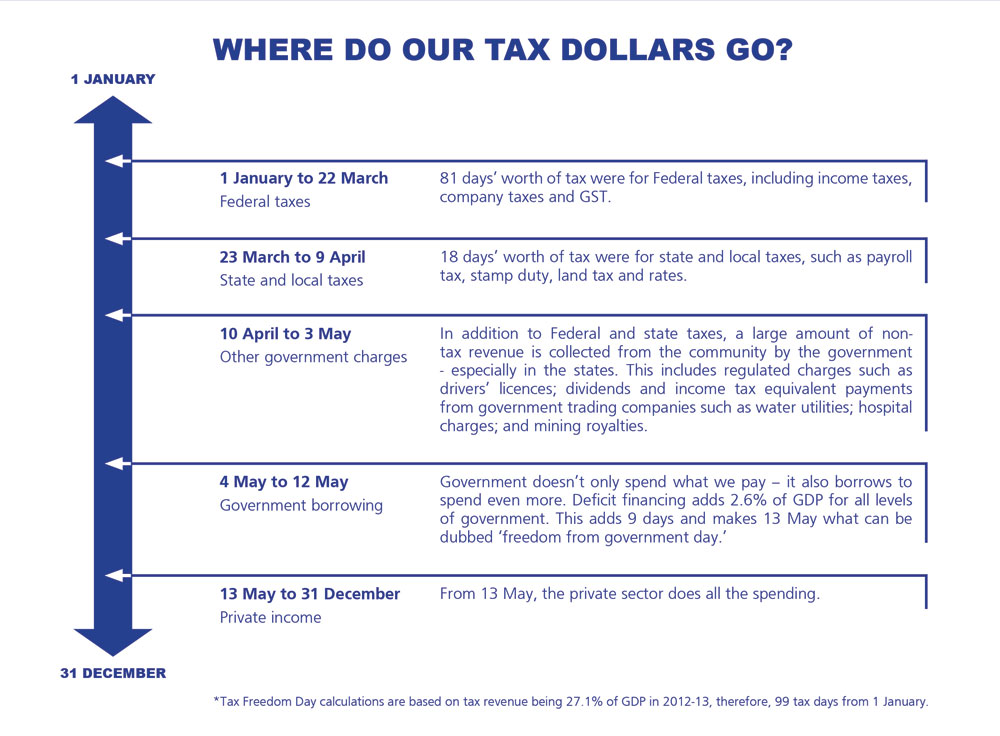
This year's Tax Freedom Day falls on Thursday, 10 April, marking the point in the calendar year when Australians are free from the burden of paying taxes, according to The Centre for Independent Studies.
Australians have had to work for 99 days in 2014 to pay their direct contribution of $413 billion to government expenditure across federal, state and local governments.
'Tax Freedom Day is an important day on the economics calendar as it signifies when we start keeping for ourselves the money we earn,' says CIS Senior Fellow Robert Carling.
'In 2014, Tax Freedom Day falls three days later than in 2013, and according to current projections it will be later still next year. This is a worrying trend which underscores the need to reduce burgeoning government expenditure.'
'It's not all clear sailing from 10 April, as governments don't restrict themselves to spending just what they tax – they keep spending until 12 May, relying on other non-tax revenue and borrowings to pay.'
'Future generations will be slugged the bills from decisions made now, and so it is crucial to take a serious look at government spending priorities and rein in unnecessary expenditure.'
'A Tax Freedom Day that falls earlier in the year would mean more money in the pockets of hardworking Australians.'
'At minimum, we should aim to reduce projected baseline Commonwealth spending by the equivalent of 2% of GDP over the next few years, with a view to further reductions in the long term,' advises Mr Carling.
Robert Carling is a senior fellow at The Centre for Independent Studies. He is available for comment.
Media Enquiries:
Aimee Cornelius
+61411 759 934
@cisoz
Tax freedom: 10 April is day of fiscal emancipation