Home » Commentary » Opinion » Black market lit up by backfiring ciggies tax
· DAILY TELEGRAPH
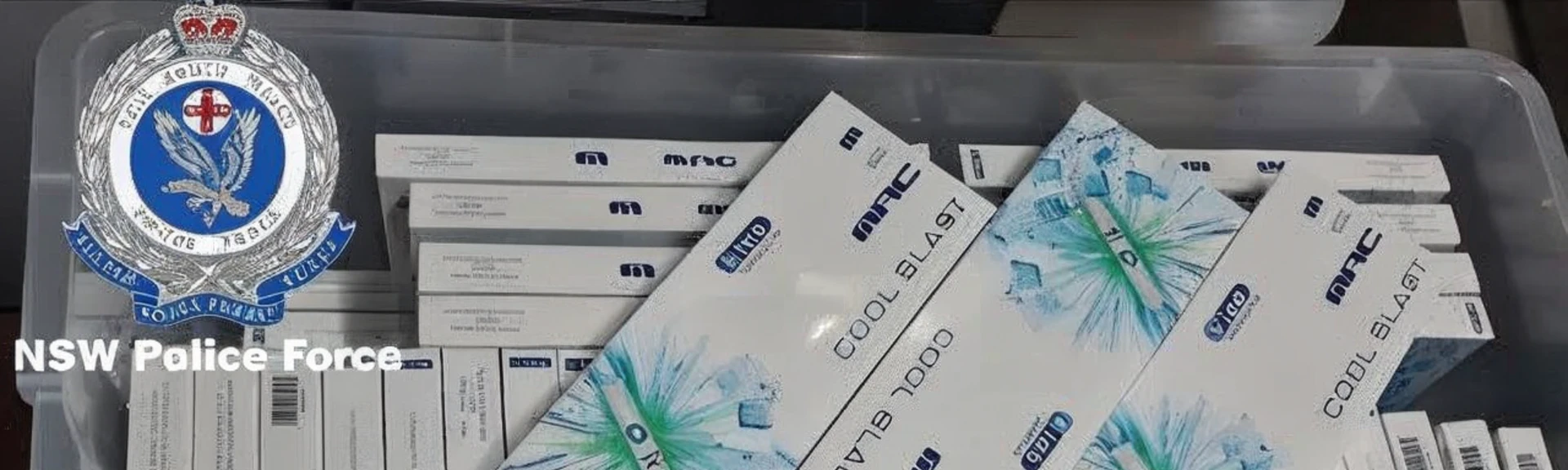
Jacking up the price of a product usually ensures that less of it is sold. That can be a good thing as increased tobacco tax has deterred young people from taking up the bad habit and encouraged older smokers to quit the lung-busters.Yet Australia’s tax-the-cigs strategy has been pushed too far and become counter-productive. By ignoring other laws of supply and demand, it has emboldened an estimated $10 billion black market in tobacco run by violent criminal gangs.And, because the illicit cigarettes are so cheap and readily available, it now may even be encouraging more people to smoke.The consensus in favour of higher till federal government tobacco excise has collapsed. That at least calls for a pause on further scheduled excise increases and an independent review of the tobacco market mayhem.When else has a Labor Health Minister called for a cut in tobacco excise? “We do need help from the federal government in relation to lowering the excise because that has created essentially a distorted market,” says NSW Health Minister Ryan Park.NSW Premier Chris Minns is ropeable that his police are left to deal with criminal lawlessless, including firebombings of tobacco outlets and the crash-and-grab gang theft of cigarette cartons from petrol stations. The cops have enough to do. And it’s worse in Victoria.Minns claims that “smoking has genuinely returned to 1991 levels” because smokers can avoid coughing up $50 or more for a legal pack of 20 cigarettes by instead paying $13 for an illegal pack.It goes back to a one-off 25 per cent hike in the tobacco excise announced in 2010 by Kevin Rudd, Treasurer Wayne Swan and Health Minister Nicola Roxon ahead of new plain packaging laws.It was part of a “long term, comprehensive, evidence based and coordinated national plan to reduce the often hidden but very real misery and wasted human potential caused by tobacco smoking in Australia”.What happened next is explained by Professor Sinclair Davidson in a new Centre for Independent Studies research paper ‘Taxing Tobacco Into Illegality – How split responsibilities and high excise created Australia’s tobacco wars’.Davidson reports evidence that the unexpected 25 per cent excise jump immediately reduced smoking amid a 10 per cent decline in the number of cigarettes sold.The feds quadrupled down with four annual 12.5 per cent excise increases from 2013 on top of automatic indexation to wages inflation. More followed so that, from 2010, the excise has jumped 470 per cent from 26c per cigarette stick to $1.49 per stick.That’s flowed through into a 330 per cent rise in the price of a 20 pack of Winfield Blues, from $12.95 to $55.80, Davidson calculates.For a while, it worked. Official measures of smoking rates fell. Yet the federal government still collected a tax revenue bonus that covered the social costs of smoking, such as lung cancer patients in public hospitals. So it was a win, win, win policy.Except for the die hard smokers, many of them battlers, who had to pay much more to support their addiction.Davidson concludes that the policy weak link came from the mis-matched roles of federal and state governments, notwithstanding the promised coordinated national strategy.The feds collected the excise, which was their favoured policy lever for reducing smoking. But the states were responsible for policing the criminal black market on the street that could undercut the high price of legal cigarettes.As one of the fathers of economics, Adam Smith, wrote in 1776: “An injudicious tax offers a great temptation to smuggling”.From 2019-20, federal excise collection fell sharply as organised crime was tempted to grab market share.Nicotine traces in waste water and consumer surveys suggest that overall smoking and nicotine consumption – such as through vapes – has stopped falling or even increased.Belatedly, the feds are spending more tackling the black market, such as through Border Force. But it won’t be easy to stamp out the illegal trade now it’s taken hold.In contrast to his NSW counterpart, federal Health Minister Mark Butler cautions that tobacco excise would have to be slashed to bring the legal cigarette price back within coo-ee of the illegal price.Among the lessons to learn? As with the pandemic, don’t rely on health experts to make the economic and legal trade-offs. The last mile of harm reduction will likely be most costly.And they should have known. Basically the same thing happened in Canada in the early 1990s, forcing governments there to back down on their sharp excise increases.Michael Stutchbury is executive director of the Centre for Independent Studies.
Black market lit up by backfiring ciggies tax