Home » Commentary » Opinion » Eraring extension exposes Bowen’s credibility gap on renewables
· AUSTRALIAN FINANCIAL REVIEW
Those still clinging to the claim that renewable energy is cheapest will look back at the end of 2025 as the last respectable moment to let go.
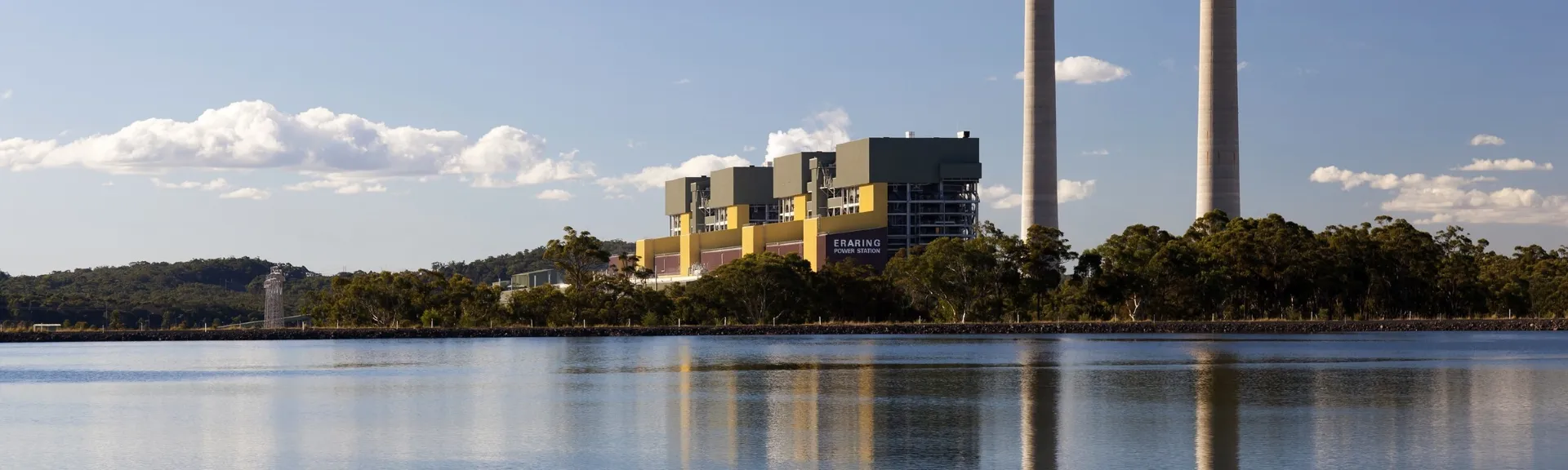
Today Origin Energy has announced that they’re planning on running the Eraring coal power station out to 2029. This was a profitable commercial decision – without any government guarantees or subsides – and has been welcomed by NSW government as helping to keep power bills down. This is a capstone on a string of decisive findings that can no longer be ignored.
In November, several energy CEOs anonymously conceded in an Australian Energy Council survey that “the renewable transition is all far more expensive than anyone expected” and that “bills will increase for at least the next decade.”
In early December, the Australian Energy Market Commission (AEMC) released its latest Residential Electricity Price Trends report, confirming this outcome and reversing the previous year’s conclusions.
By the end of December, after Tomago Aluminium failed to find renewable power cheap enough to replace its expiring coal contract, the federal government committed to untold billions in subsidies to keep the smelter running on ‘green’ energy. Meanwhile, Alinta Energy, with generation assets dominated by Loy Yang B – Victoria’s youngest brown coal generator – has been sold for a comfortable $6.5 billion, despite official policy assuming closure of all coal within a decade.
The discord between these signals and the federal government narrative — that coal is the cause of expensive power and renewables will soon solve it — has become untenable.
The underlying reason isn’t complicated. The global experience is that weather-dependent energy scales badly. Adding 10–20% intermittent generation is easy; many countries, including Australia, have done so quickly, fuelling unrealistic expectations. But once wind and solar reach 20–30% of supply, the honeymoon ends. The system suddenly requires vast new transmission and storage to move energy around the clock and across the country. No nation with high shares of wind and solar still enjoys cheap electricity.
So why have our expert bodies avoided stating this plainly and instead cultivated the belief that a system saturated with intermittent energy is somehow the cheapest?
Two dynamics explain it.
First, models quietly hard-code government policy targets as inevitable outcomes.
Eight months ago, Chris Bowen waved a stack of reports at the National Press Club, declaring, “we based our plan on the experts”. The front folder was the 2024 Integrated System Plan (ISP), billed as identifying the ‘lowest-cost way’ to reach net zero. In reality, as later confirmed, the experts based their plan on Bowen’s policy.
When confronted in a Senate Inquiry with FOI evidence showing Bowen’s department pressuring AEMO to force the 82% renewable target into every scenario, AEMO’s CEO admitted the truth: “The ISP is not a tool to evaluate government policy. It’s a tool to say what needs to be delivered for that government policy to succeed.”
That is, AEMO never calculated the final price of electricity and never compared renewables with alternatives such as gas, coal, or nuclear. All policy targets were treated as fixed constraints, and the ‘least-cost’ language applied only to fine-tuning the transmission schedule — not to the generation mix itself.
The draft ISP for 2025 makes a revealing new admission. In justifying the hard-coding of policy outcomes, it notes: “All NEM governments have policies… convinced that its long-term benefits are worthwhile.” The report then lists a range of supposed benefits — but conspicuously does not include low prices.
The second dynamic muffling warning bells is the growing reliance on a suite of ‘fudge factors’: green hydrogen, ‘coordinated’ consumer batteries, hyper-flexible EV charging, and other speculative demand-side miracles that consistently fail to materialise.
The evolution of the AEMC’s Price Trends report shows this clearly. After disappearing for two years during Labor’s first term, the formerly sober three-year forecast resurfaced in 2024 heavily reshaped to project all government policy being accomplished over a ten-year horizon. In doing so, it still claimed electricity prices would fall 13%.
Anthony Albanese and Chris Bowen leaned heavily on this claim when defending their emissions targets for 2035.
Yet the AEMC’s new 2025 report reverses that conclusion. It forecasts a brief 5% dip in prices over the next five years — while the system floods with subsidised renewables to hit the 2030 target — followed by a 13% rise in the following five years as more coal exits and the system leans increasingly on gas to maintain reliability.
It is a remarkable admission: even if more than double the current build-rate of renewables to meet targets, the resulting system will be more expensive overall.
So what changed in just one year? The answer is buried in the report’s prescription: “With a faster rate of electrification, more renewables would reduce household energy costs.”
Here, ‘electrification’ is code for the same fudge factors earlier models relied upon but reality has failed to deliver — especially ‘coordinated’” consumer batteries, meaning home batteries paid for by households but effectively gifted to the grid to smooth renewable output. The AEMC itself concedes that earlier optimism about these resources has “more than halved” since the last report.
Electrification also includes EV uptake, paired with the assumption that drivers will radically alter routines to charge and discharge at times convenient for the grid. And it relies on enormous new electrolysers for green hydrogen, assumed to ramp production up and down to chase cheap solar.
Instead of this imaginary flexible demand, the latest outlook includes more flat, continuous load from data centres — a pattern renewables struggle to meet cheaply.
Such findings should prompt caution: renewables cannot meet real-world demand patterns at low cost. Instead, they have become rallying cries for more subsidies to revive the very assumptions that failed.
Bowen again claimed that “the best thing we can do for energy prices is more renewables,” but the credibility gap is now unbridgeable. Costs are rising, and 2025 should be remembered as the last respectable chance to admit it.
If governments want to retain public trust, 2026 must bring a new bargain: honest expectations about what this transition costs, and why. Otherwise, the cycle of upbeat promises and inevitable disappointment will keep eroding faith in the entire project.
Aidan Morrison is the Director of Energy at the Centre for Independent Studies
Eraring extension exposes Bowen’s credibility gap on renewables