Home » New policies needed for a trapped generation

Federal and state budget spending has ratcheted up to a new record peace-time plateau of close to 40% of GDP — even higher than under the mad 1970s Whitlam government spendathon.
As in the 1970s, excess government spending is colliding with an over-regulated economy, a global oil-price shock and rising inflation — hence the Reserve Bank’s second interest rate rise in two months.
Structurally bigger government has been inflated by more and more non-means tested ‘universal’ entitlement spending such as on education, health care and child care.
As Centre for Independent Studies scholar Robert Carling points out, more than half of voters now rely on government for most of their income through public-sector wages, welfare benefits or subsidies. Expanding middle-class welfare appears to have become a political strategy to encourage more people to effectively vote for their own incomes.
It’s unsustainable. The growing culture of dependency comes with federal budget deficits stretching out for the next decade, a record high and rising tax burden on wage and salary earners, an approaching $1 trillion federal government debt to be shouldered by future taxpayers and what the Productivity Commission calls an “ever-growing burden of regulation” behind the decade-long stalling of productivity.
We can wait for the inevitable crisis, when governments eventually run out of money to fund the whole show. But, as in the mid-1970s when CIS was founded, is there an alternative policy program based more on choice and incentive that could reboot prosperity but also be attractive to voters?
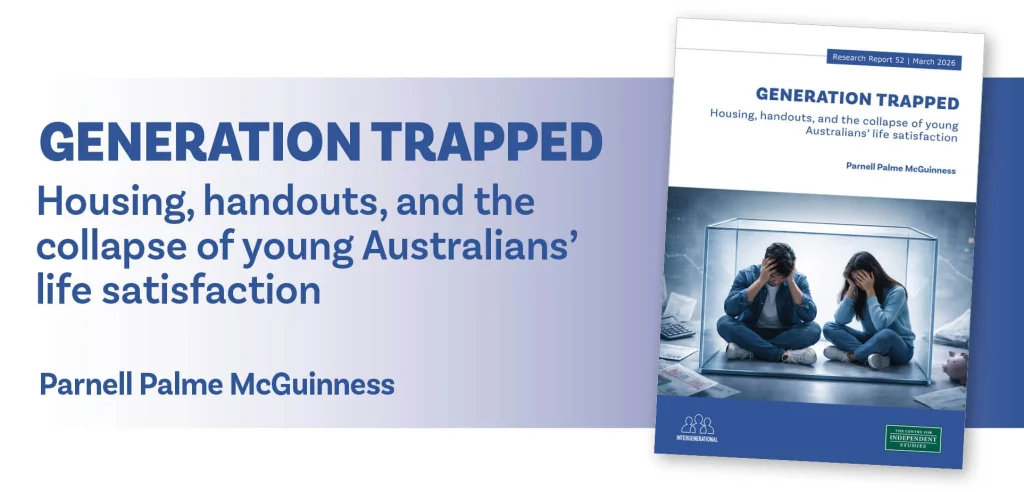
This is the big question underlying a major new research program by CIS senior fellow Parnell Palme McGuinness, beginning with her first report this week on the attitudes of Australians aged 18 to 34. Reports on other demographic groups will follow.
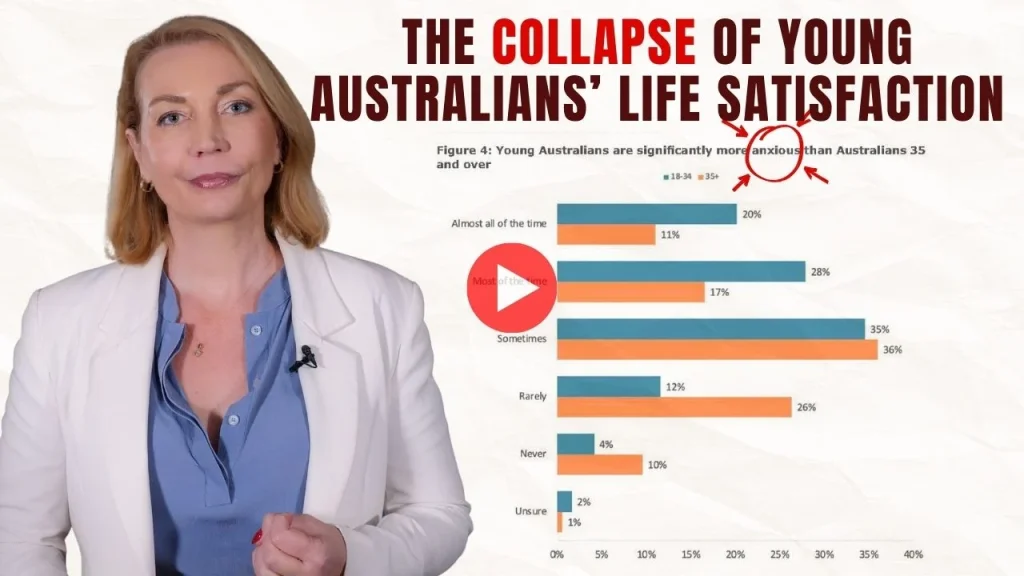
Parnell’s Generation Trapped report notes that today’s younger adults spend longer in formal education, worry that home ownership is increasingly beyond their financial reach and are delaying their own family formation, perhaps forever. And they report higher anxiety and less life satisfaction than their parents and grandparents at this age.
Young Australians do not aspire to radically different things than previous generations. They want financial security, home ownership, meaningful and well-paid jobs and to raise their own families. The difference now is that they increasingly worry that these life goals are out of reach.
Parnell’s research identifies six ‘tribes’ she labels as Progressive Identitarians, Dislocated Post-Traditionalists, Natals, Strivers, Detacheds and Head-Starts.
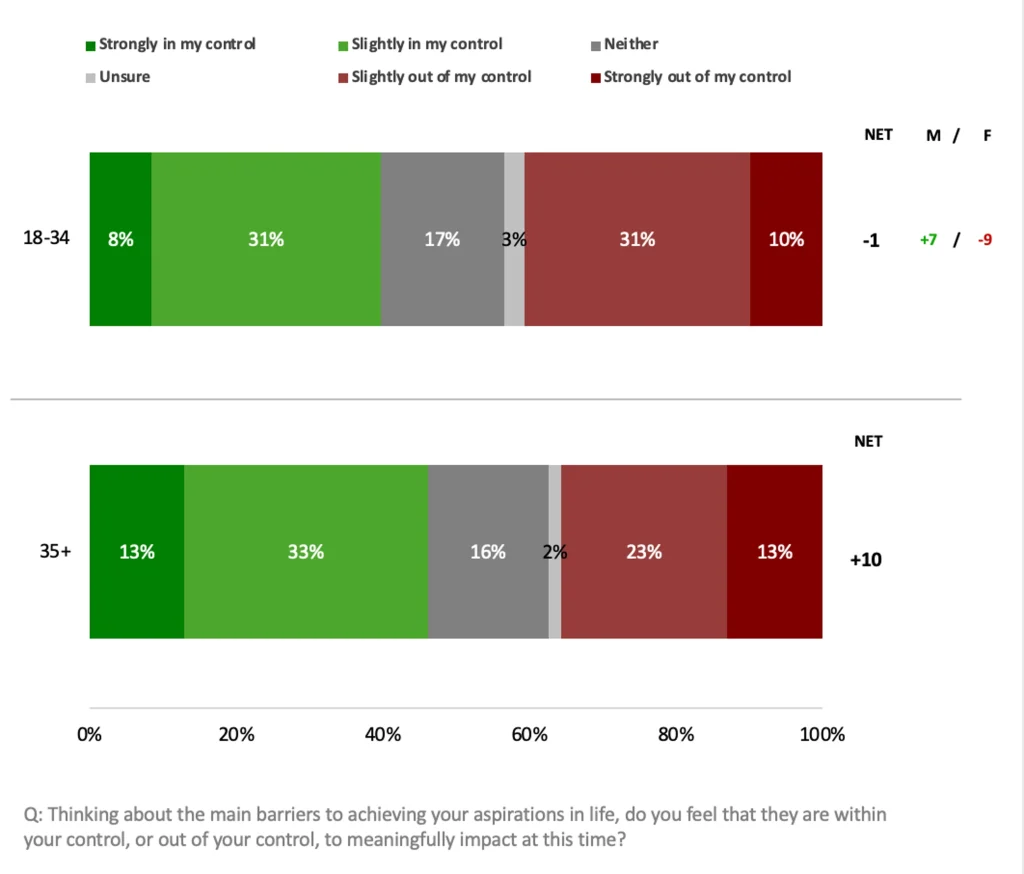
A key finding from her deep dive is that fewer than four in 10 of these younger Australians believe they can clear the barriers standing in the way of their aspirations.
This loss of agency strongly correlates with younger people’s diminished life satisfaction and heightened anxiety. Some tribes have become resigned or disengaged; others angry and anti-establishment, while some shift toward short-term gratification at the expense of longer-term planning.
The tribes which feel they have the ability to exercise control and agency have higher life satisfaction. “In practical terms, this means that policies which focus on government transfers while narrowing choice or reinforcing dependency may fail to improve — and may even worsen — overall life satisfaction,” Parnell concludes.
John Kehoe wrote up Parnell’s report particularly well in his column in The Australian Financial Review, concluding: “It’s time to open our minds to how policy that promotes opportunity and agency can lift up the younger generations of Australians to meet their full potential”. Kehoe points to first home owners handouts that push up house prices, compulsory superannuation contributions just when younger people are most financially strapped and one-size-fits-all ‘universal’ childcare subsidies.
This is the start of an ambitious project to build a policy framework based on choice and incentive — rather than big government — that suits the real-world lives of people as they are today.
Watch out for her further readings, breaking down the needs and aspirations of each of the youth cohorts, and an event featuring Parnell, state Liberal shadow minister Jacqui Munro and financial advisor and Instagram wit Jack Tossol at 6pm on Wednesday May 20 as they discuss the plight of young Australians and how it can be remedied.

New policies needed for a trapped generation