Home » Commentary » Opinion » Eraring’s extension puts fresh focus on NSW reliability planning
· ENERGYNEWS BULLETIN
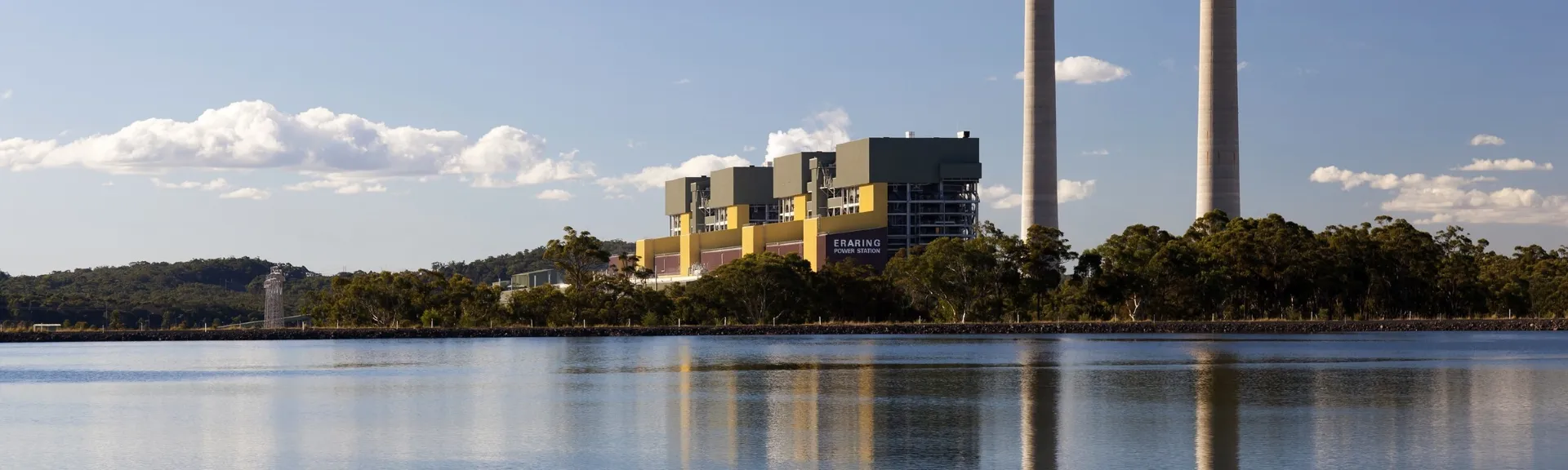
Eraring’s recently announced extension until 2029 has highlighted the absurdity of two key government decisions to approve spending in the name of the energy transition.
The first was former NSW Energy Minister Matt Kean’s approval of $700 million to be paid to NSW grid operator Transgrid and BlackRock-owned Akaysha Energy for the Waratah Super Battery project.
The second was the Australian Energy Regulator (AER) giving tacit approval of Transgrid’s application for $6.3 billion in funding for system strength services.
Both decisions were made on the assumption Eraring would close in 2025 and 2027, respectively. And both will push energy bills in NSW even higher while providing no material benefits for consumers.
In 2022, Matt Kean directed Transgrid to augment the transmission network to support the Waratah Super Battery project under his newly legislated powers as energy minister.
Akaysha Energy would construct and operate the battery itself, which was meant to be a ‘shock absorber’ to prevent network collapse if faults were experienced on extra-loaded lines bringing more renewable energy into Sydney.
Despite this energy being far from sufficient to replace Eraring, Kean made this direction on the grounds that the battery was “critical to the affordability, reliability, security and sustainability of electricity supply in NSW, given the planned closure of Eraring Power Station in 2025”.
Kean said he considered “all other timely options”, including a two-year extension of Eraring until 2027, but denied this option “represents the same value for money nor achieves the same extent or duration of benefits for security and reliability”.
He was wrong on two counts.
First, his assertion that contracting the Waratah Super Battery would provide more value for money than extending Eraring was false.
Despite signing the NSW government’s underwriting deal in 2024, Origin subsequently decided in 2025 to decline the option of taxpayer underwriting — because Eraring was so profitable it didn’t need the subsidy.
Second, Kean’s assertion that procuring battery services was better for security and reliability than extending a coal plant — even an ageing coal plant — was false.
NSW Premier Chris Minns confirmed Eraring was “required to keep the lights on” when announcing the agreement to extend the plant until 2027.
While the deferral of Eraring’s closure — including the recent extension until 2029 — benefits consumers and hasn’t cost the taxpayer a cent, the same is not true of the Waratah Super Battery.
NSW consumers will end up paying $700m for a service they don’t need, most of which will be pocketed by BlackRock, which will still fully own the battery after the ‘shock absorber’ service ends in 2030.
NSW energy ministers are not the only ones approving projects that inflate consumer bills while delivering no material benefits. The AER has also approved cost pass-throughs that benefit Transgrid instead of the consumers the regulator is sworn to protect.
In July 2025, Transgrid completed the regulatory process to apply for $6.3b for the procurement of synchronous condensers and grid-forming batteries.
These were meant to replace the inertia, fault current, and other security services that large spinning turbines like Eraring’s provide at negligible cost.
Despite this rationale, Transgrid admitted the proposed solution wouldn’t be able to fully replace Eraring’s contribution to system stability, as the modelling showed reliability gaps would remain between 2027 and 2029.
The system strength project’s cost-benefit analysis did show net benefits for consumers — but only because the entire model depended on Eraring closing in 2027.
Bizarrely, Transgrid dismissed the possibility of a further extension as “not a credible option” despite a 2029 extension without taxpayer underwriting being an explicit option agreed to by the NSW government and Origin in the original underwriting deal.
In August, the Centre for Independent Studies raised a dispute about the application, arguing Transgrid should at least consider the possibility of coal extensions.
In December, the regulator rejected the dispute. The regulator agreed with Transgrid’s assertion that a further Eraring extension was not “commercially feasible” and that coal extensions “would not be reflective of what is currently expected to occur”.
A month later, that expectation was dashed when Eraring was extended for the second time, negating the need to pay Transgrid to procure additional equipment.
Instead of protecting consumers from wasteful expenditure that needlessly inflates bills, the regulator has allowed a pointless $6.3b project to slip through on a technicality.
Despite the hopes and dreams of governments, intermittent renewables and batteries have once again proven themselves unable to replace the reliable, low-cost electricity provided by coal plants.
It is time policymakers accepted this and stopped trying to push through unnecessary projects designed to support a coal-free grid.
Coal extensions are an indisputable sign of an energy transition in crisis, but we cannot rely on them forever.
Australia must start building new coal-fired generation capacity, or lift the ban on nuclear energy, to give our electricity grid the reliable power it needs.
Zoe Hilton is a Senior Policy Analyst in the Centre for Independent Studies Energy Program.
Image credit via Wikipedia
Eraring’s extension puts fresh focus on NSW reliability planning