Home » Stuck in the Friedman era? Guilty as charged
Yours truly came under fire this week in The Australian Financial Review letters page under the heading: “Stutchbury stuck in the Friedman era”.
My bad was to defend ‘neoliberalism’ from the likes of the Green Left, Kevin Rudd after the GFC, Jim Chalmers’ ‘values-based capitalism’ — and now Liberal frontbencher Andrew Hastie and Nationals leader Matt Canavan.
Amid the One Nation challenge, Hastie says that “no one’s going to reward us for a final last stand for neoliberal politics”. Canavan declares that “a microwaved Milton Friedman is not going to solve our economic woes”.
I begged to differ in a column for AFR Weekend Australia prospered from post-Cold War globalisation and the rise of China. Now geo-political competition and conflict have overtaken that rules-based era. Lean, just-in-time inventory management has given way to disrupted supply chains and a new premium on economic sovereignty.
But the best response is not bigger government, higher taxes, regulated pay increases, industry protectionism and a net zero-inspired loss of our cheap energy advantage. This is making Australia poorer, not richer; and weaker, not stronger. How is that good politics?
Today is an echo of 1975 when a Middle East oil shock, a big-spending Labor government, higher taxes, excess regulation and excess union power produced the stagflationary end of the post-war Keynesian consensus.
And when Milton Friedman visited Australia with a ‘neoliberal’ prescription that fed into the-then fledgling Centre for Independent Studies and both the Hawke-Keating and Howard-Costello governments. It helped make Australia one of the world’s most affluent nations.
Once again, however, big government is crowding out the private economy. A founder of the $50 billion NDIS complained in The Australian this week that the scheme has “culled” the social capital of family, friends and community who once supported people with disability in everyday life.
And the Financial Review reported how the Fair Work Commission is now forcing businesses such as supermarkets to fully compensate owner-driver truckies for higher fuel costs. It’s like anti-competitive wage indexation for private contractors and, say some, a protection racket for trucking companies such as Linfox and Toll.
It will feed into higher prices for consumers, likely prompt the FWC to grant higher award wages for workers and then will likely force the Reserve Bank to hike interest rates again. Hello recession.
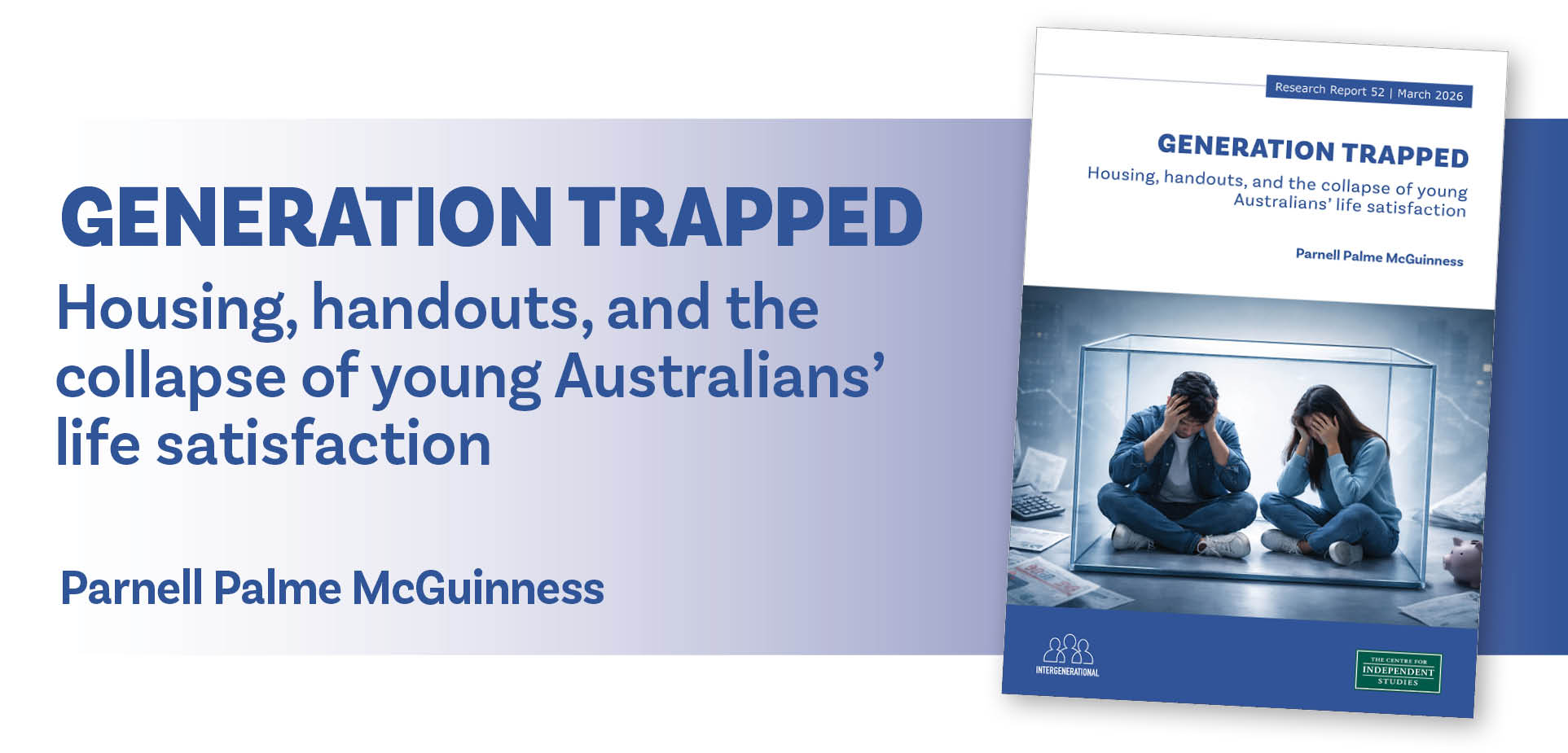
Australians may not yet be revolting against bigger government and higher taxes, nor marching in the streets for neoliberalism. But CIS senior fellow Parnell Palme McGuinness is leading a research effort into how a policy agenda based on choice could be more politically attractive. Such as an alternative to institutionalised ‘universal’ childcare.
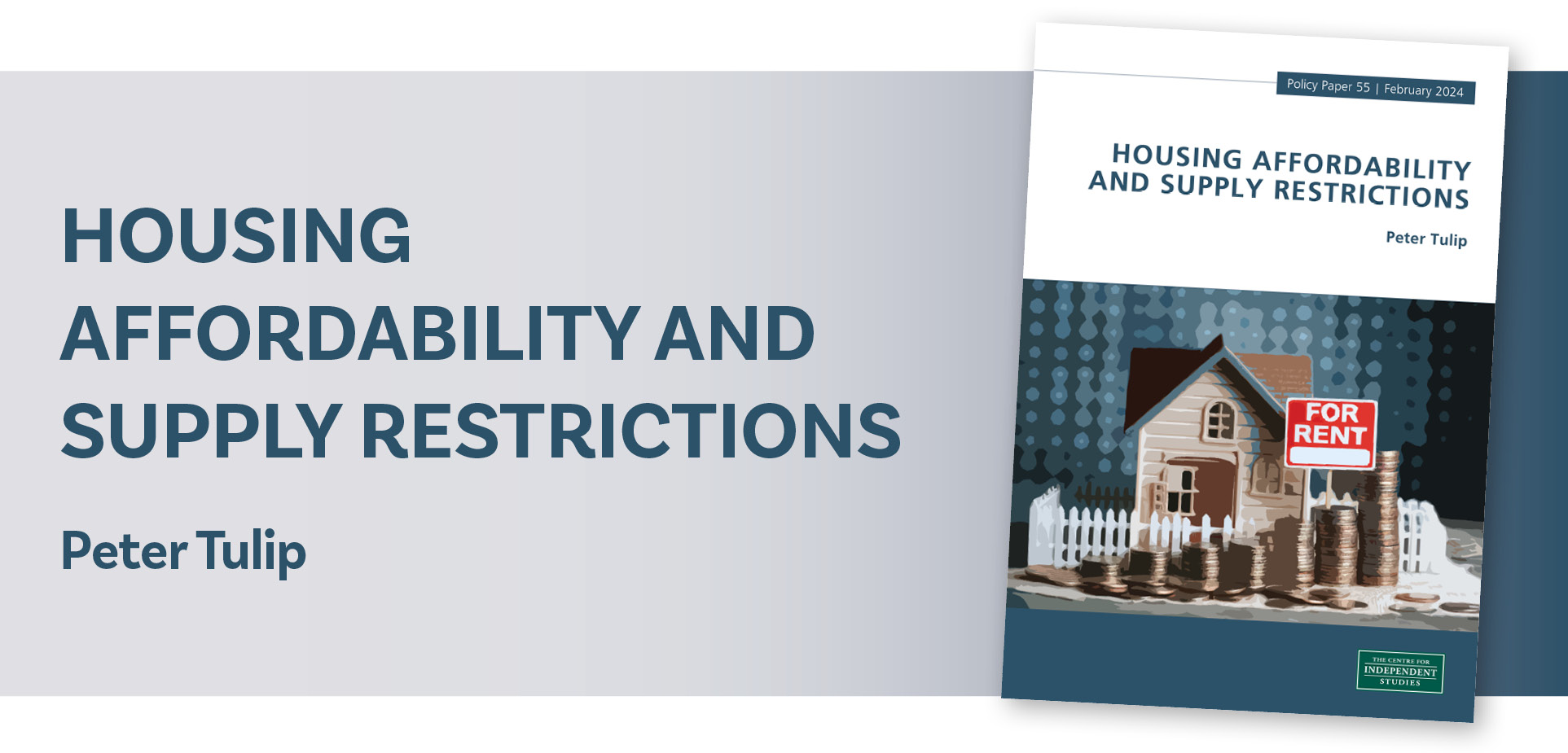
State Labor governments have taken on board CIS chief economist Peter Tulip’s finding that excessive planning and zoning restrictions are mostly to blame for high housing prices. Tulip’s recommended supply-side liberalisation would make Friedman proud.
CIS senior fellow Steven Schwartz has traced how the self-reinforcing incentives facing parents, doctors, drug companies and NDIS providers have encouraged the budget-busting explosion of diagnosed childhood autism.
The end of the Cold War facilitated prosperity through economic specialisation and trade. Now some of that will need to be reinvested in shoring up supply chains. The Middle East war will rightly prompt Australia to reinforce our skinny liquid fuel reserves. We should help loosen China’s stranglehold over the supply of critical minerals.
But even a modest degree of self-sufficiency will come at a hefty cost, either to over-stretched households or to a federal budget already stuck in red before Wednesday’s announced defence spending increases.
The Albanese government enlists taxpayers to subsidise ‘Future Made in Australia’ heavy industry, extending to the manufacturing of solar panels. Canavan’s calls for import tariffs so Australia can make more things here would come at a similar cost to consumers.
The hard lesson of Australia’s protectionist past is that propping up uncompetitive and high cost industries invariably poses a burden on other sectors, including on the mining, gas and farm exporters that actually support our prosperity.
For the best of the CIS Friedman collection, try Milton Friedman, Taxation, Inflation and the Role of Government, Maurice Newman, Milton Friedman: A Tribute, and Oliver Hartwich, The Great Neoliberal Misunderstanding.
Stuck in the Friedman era? Guilty as charged